Call: 08071930399
 Send Inquiry
 Send Inquiry
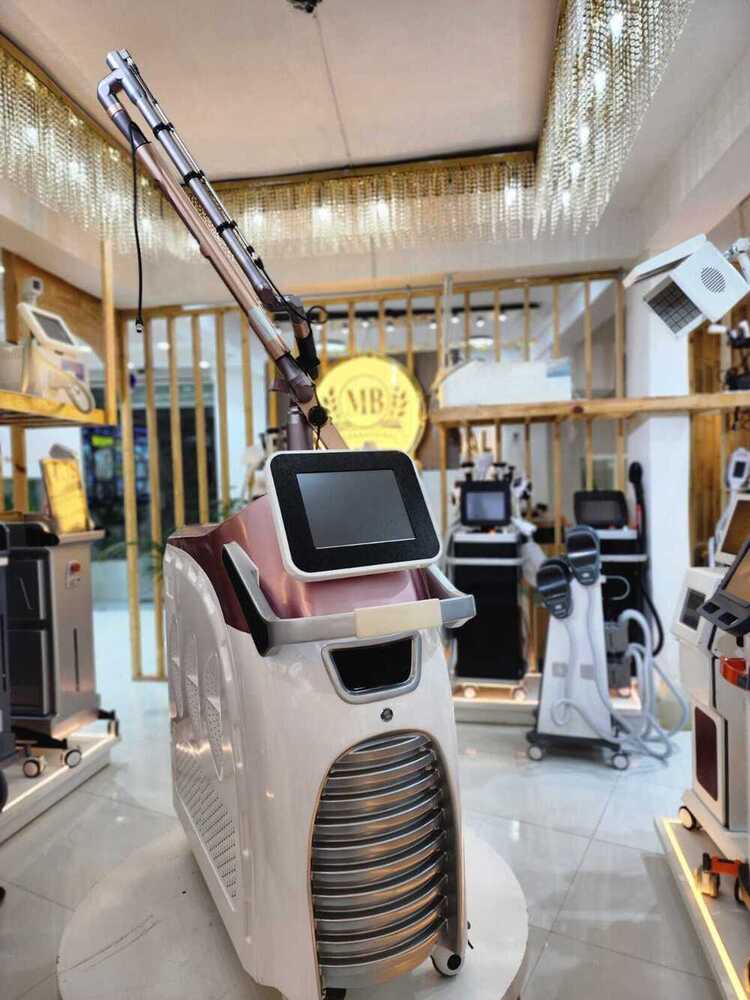
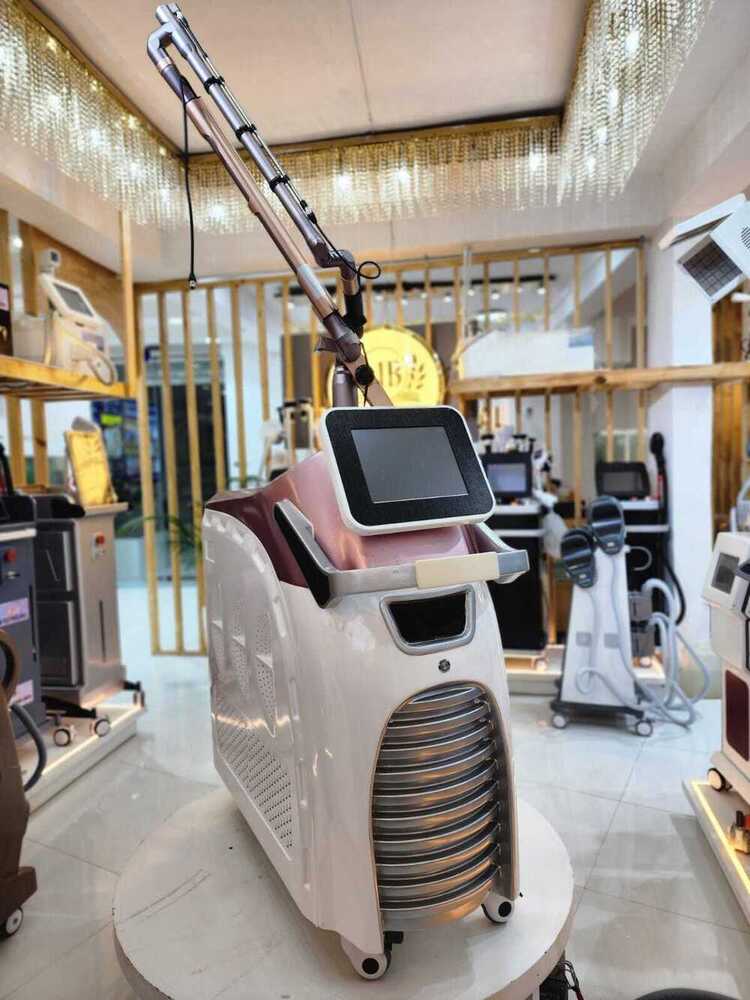
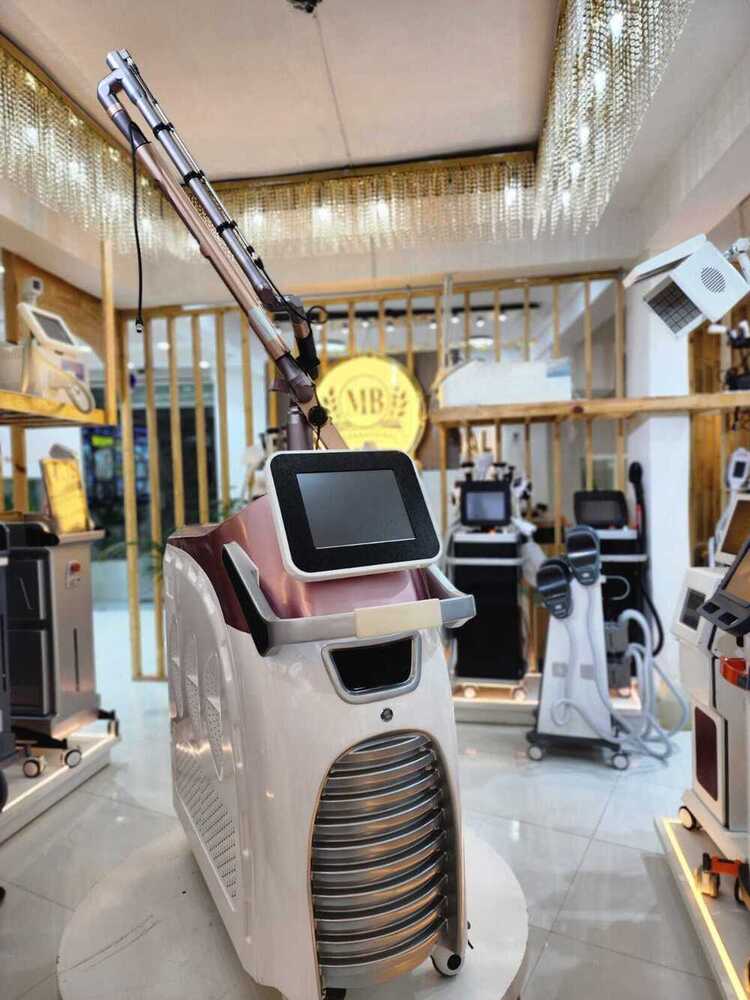
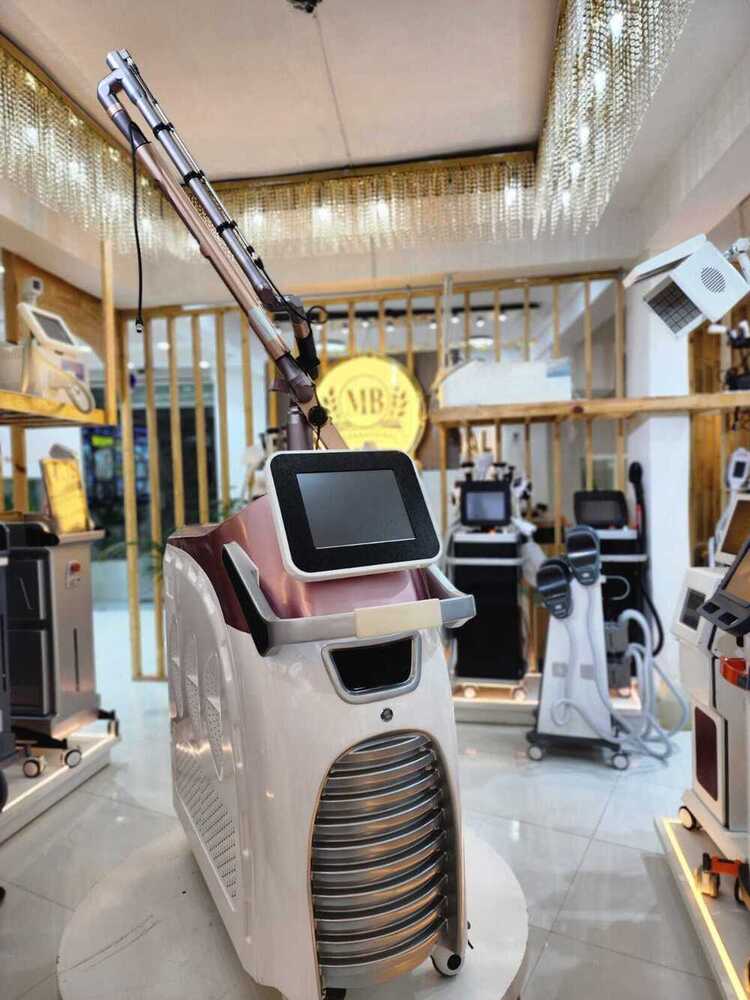
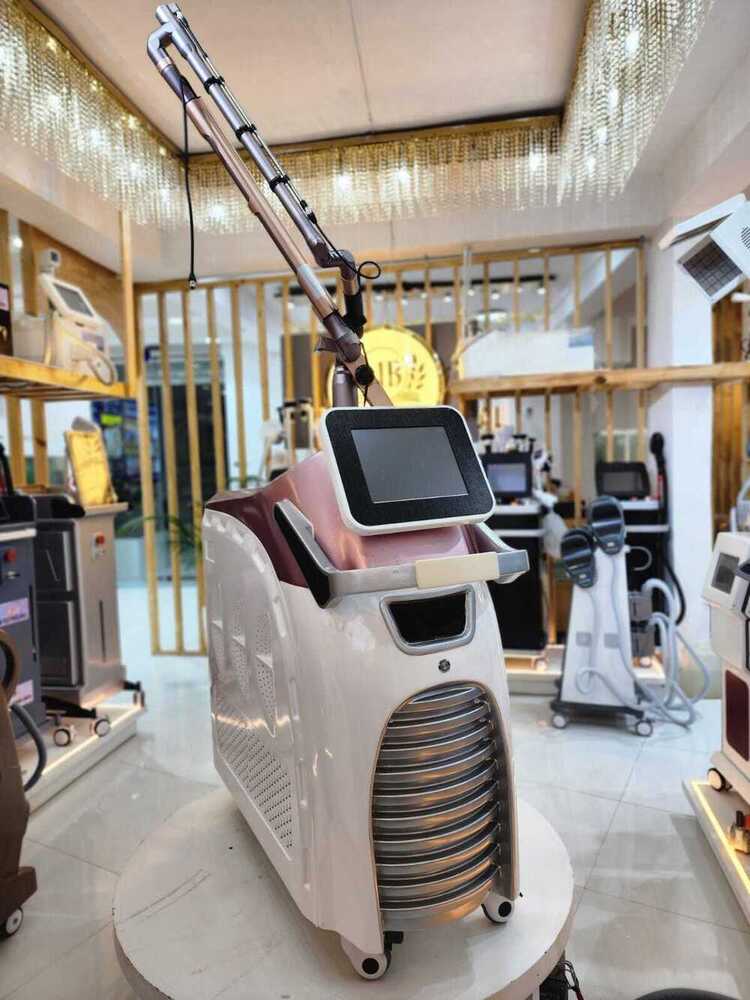
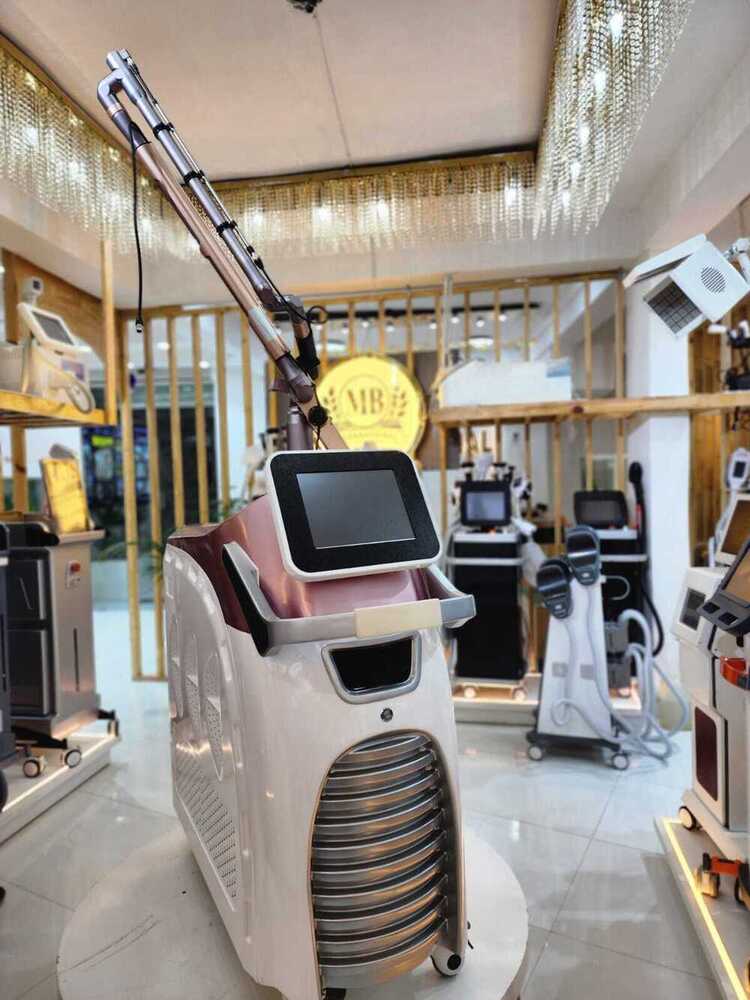
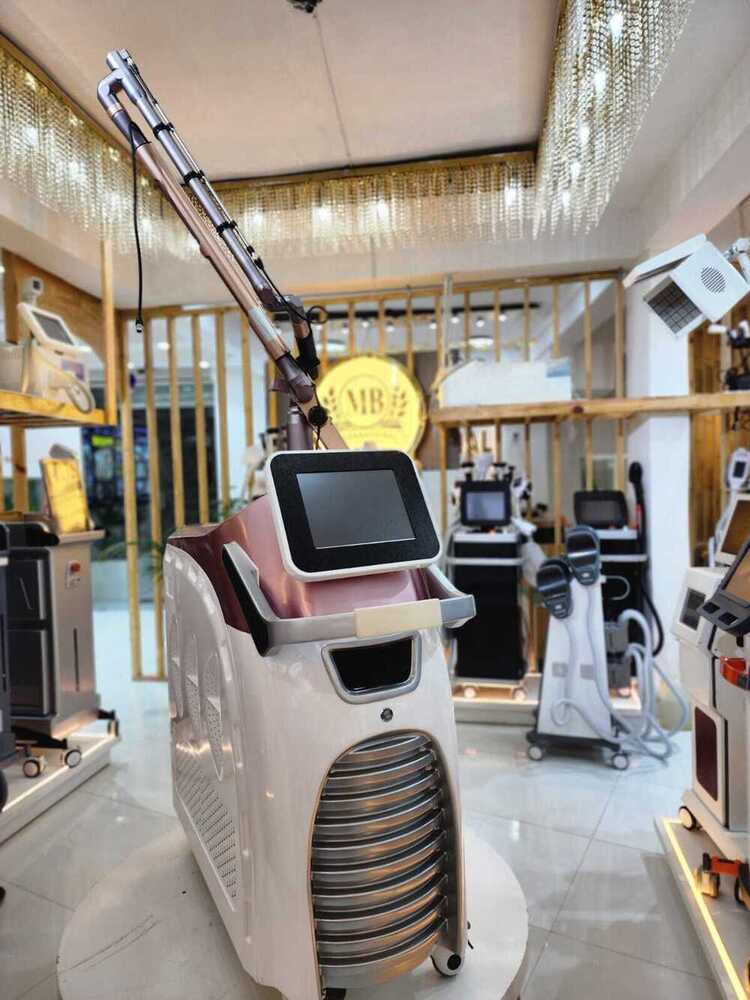
ADVANCE PICOSECOND LASER MACHINE
Price 250000 INR/ Container
MOQ : 1 Number
ADVANCE PICOSECOND LASER MACHINE Specification
- Screen
- touch screen
- Power
- 3000 Watt (w)
- Color
- PINK & GREY
- Control Software
- Touch
- Skin Type
- all skin type
- Display Type
- LED
- Warranty
- 1
- Weight
- 100-150 Kilograms (kg)
- Style
- Not Portable
- Feature
- Tatto removal,hyperpigmentation removal
- Product Type
- PICOSECOND LASER
- Frequency
- 24 Hertz (HZ)
- Voltage
- 220 Volt (v)
About ADVANCE PICOSECOND LASER MACHINE
A picosecond laser is an ultrafast laser that emits pulses of light with durations in the range of picoseconds (trillionths of a second). These lasers are used in various applications, including skin treatments, tattoo removal, and materials science.
Key features and characteristics of picosecond lasers:
Ultra-short pulse duration:
This is the defining characteristic, allowing for rapid energy delivery and precise targeting of specific pigments or structures.
High peak power:
The short pulse duration allows for high peak power density, which is crucial for breaking down pigment and creating micro-damage in tissues.
Versatile applications:
Picosecond lasers are used in aesthetics for tattoo removal, pigmentation reduction, and skin rejuvenation, as well as in materials science for micro-machining and surface modification.
Multiple wavelengths:
Different wavelengths can be used to target different pigments or materials.
Fractional delivery systems:
Some picosecond lasers are equipped with fractional delivery systems, which create micro-spots of energy on the skin, promoting tissue regeneration and collagen production.
How picosecond lasers work:
Picosecond lasers utilize the "photoacoustic effect" to break down pigments. The short, intense pulse of light heats the target pigment (like tattoo ink or melanin) very rapidly, causing it to expand and fragment. These small fragments are then naturally eliminated by the body.
Common applications of picosecond lasers:
Tattoo removal:
Picosecond lasers are highly effective at breaking down tattoo ink, making them a preferred treatment for removing or fading tattoos.
Pigmentation reduction:
They can be used to lighten age spots, freckles, melasma, and other pigmented lesions.
Skin rejuvenation:
The heat generated by the laser can stimulate collagen production, leading to improved skin texture, reduced wrinkles, and enlarged pores.
Other applications:
Picosecond lasers are also used in materials science for various purposes, such as surface modification and micro-machining.
Tell us about your requirement

Price:
Quantity
Select Unit
- 50
- 100
- 200
- 250
- 500
- 1000+
Additional detail
Mobile number
Email

More Products in Tattoo Removal Machine Category
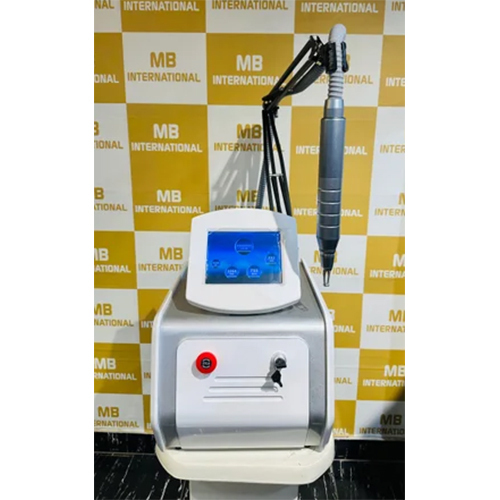
Pico Laser Tattoo Removal Machine
Price 85000 INR / Unit
Minimum Order Quantity : 1 Unit
Automation Grade : SemiAutomatic
Usage & Applications : Tattoo Removal
Features : Good Quality
Voltage : 220 Volt (v)
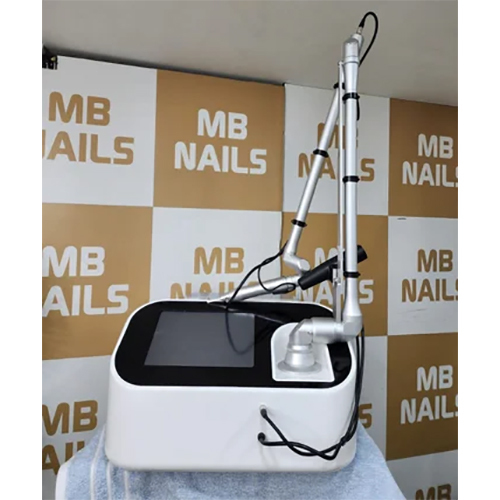
Touch Screen Picosecond Laser Machine
Price 255000 INR / Unit
Minimum Order Quantity : 1 Unit
Automation Grade : SemiAutomatic
Usage & Applications : Professional
Features : Portable
Voltage : 220 Volt (v)
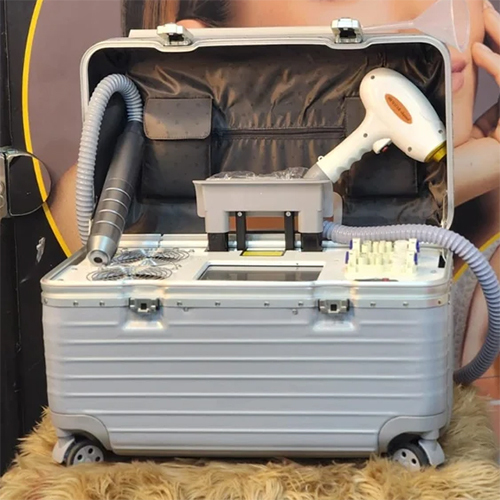
Professional Tattoo Removal Machine
Price 82000 INR / Unit
Minimum Order Quantity : 1 Unit
Automation Grade : SemiAutomatic
Usage & Applications : Tattoo Removal
Features : Good Quality
Voltage : 220 Volt (v)
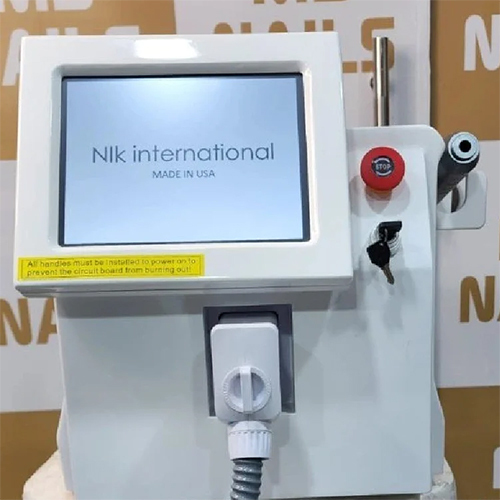
Electric Tattoo Removal Machine
Price 110000 INR / Unit
Minimum Order Quantity : 1 Unit
Automation Grade : SemiAutomatic
Usage & Applications : Parlour
Features : Good Quality
Voltage : 220240 Volt (v)

Contact Details
MB INTERNATIONAL
GST : 07EYEPS9852L1ZH
- D-212, Nilothi Industrial Area, Near Union Bank,New Delhi - 110041, India
- Phone :08071930399
 Send Inquiry
Developed and Managed by Infocom Network Private Limited.
 English
 Spanish
 French
 German
 Italian
 Chinese (Simplified)
 Japanese
 Korean
 Arabic
 Portuguese